Project detail
Marketplace for local services on a map
Mapus is a mobile marketplace that connects people who need help with people and small businesses who can provide services — from home repairs and cleaning to tutoring, pet care and legal support. As a Co‑founder, I led product and UX design using a human‑centered approach: we co‑created the app with real providers and clients, built a map‑first experience for finding tasks and executors nearby, and shipped a cross‑platform Flutter MVP with a simple subscription model for professionals. The project is currently on hold due to funding constraints after the full‑scale invasion of Ukraine.
Context & research
Live interviews with real providers and clients shaped Mapus from day one.
Key insight from executors and clients:
"I want to know there are people around me who can help quickly if something breaks."
People didn't just want services — they wanted "district services": providers they could reach in 15 minutes, not hours.
Tested in Kyiv with architecture built for nationwide scaling across Ukraine.
Problem & early failure
Initial assumption (wrong): Clients primarily want to post tasks.
We built a map‑first home with one big input: "What do you need help with?"
Search for existing providers was buried deeper.
Reality from users:
Some wanted to create tasks and wait for offers.
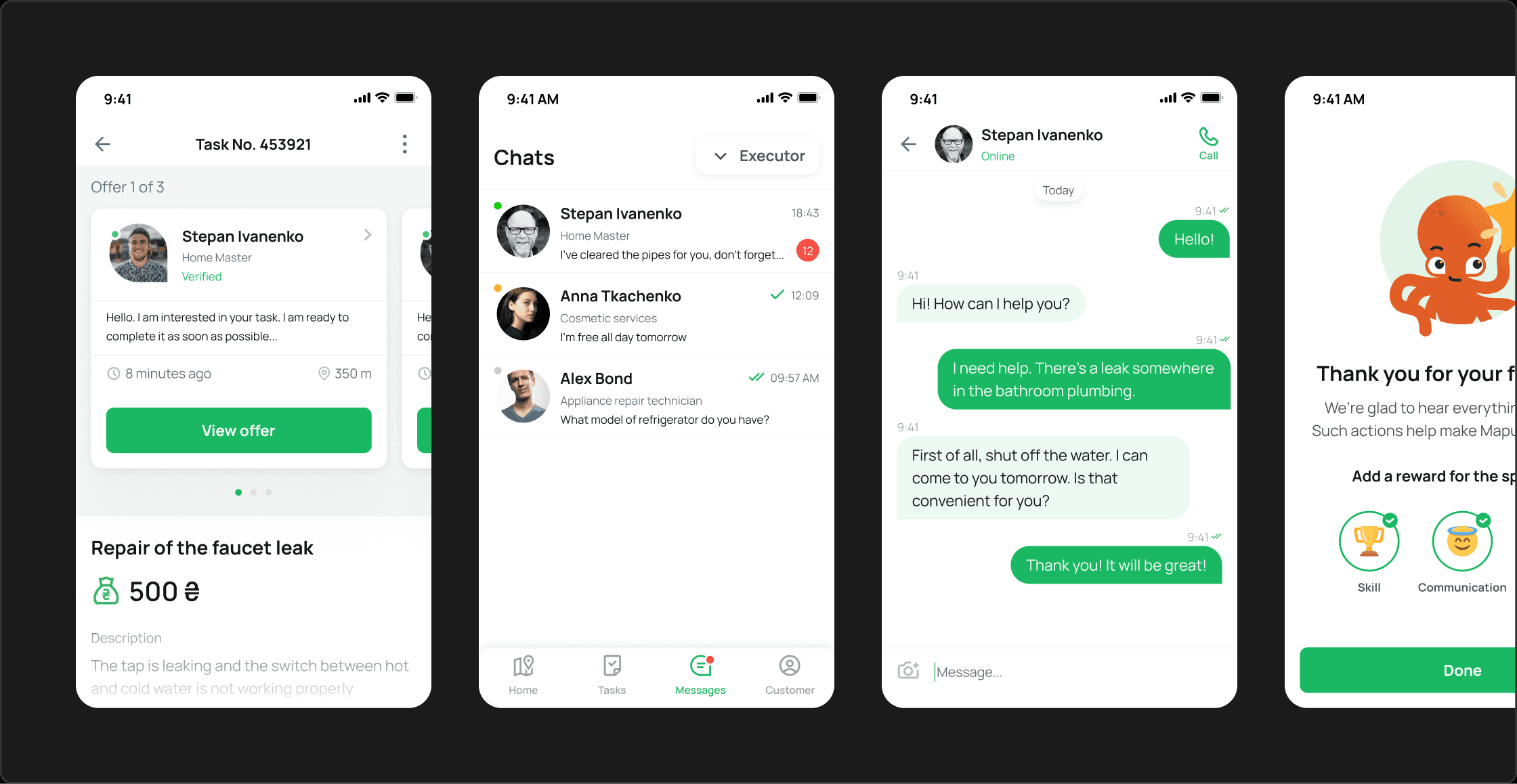
Others wanted to find providers immediately and message them directly.
Solution: Clear dual paths on the home screen — "Create task" OR "Find provider nearby".
Human‑centered solution
Map‑first + dual roles
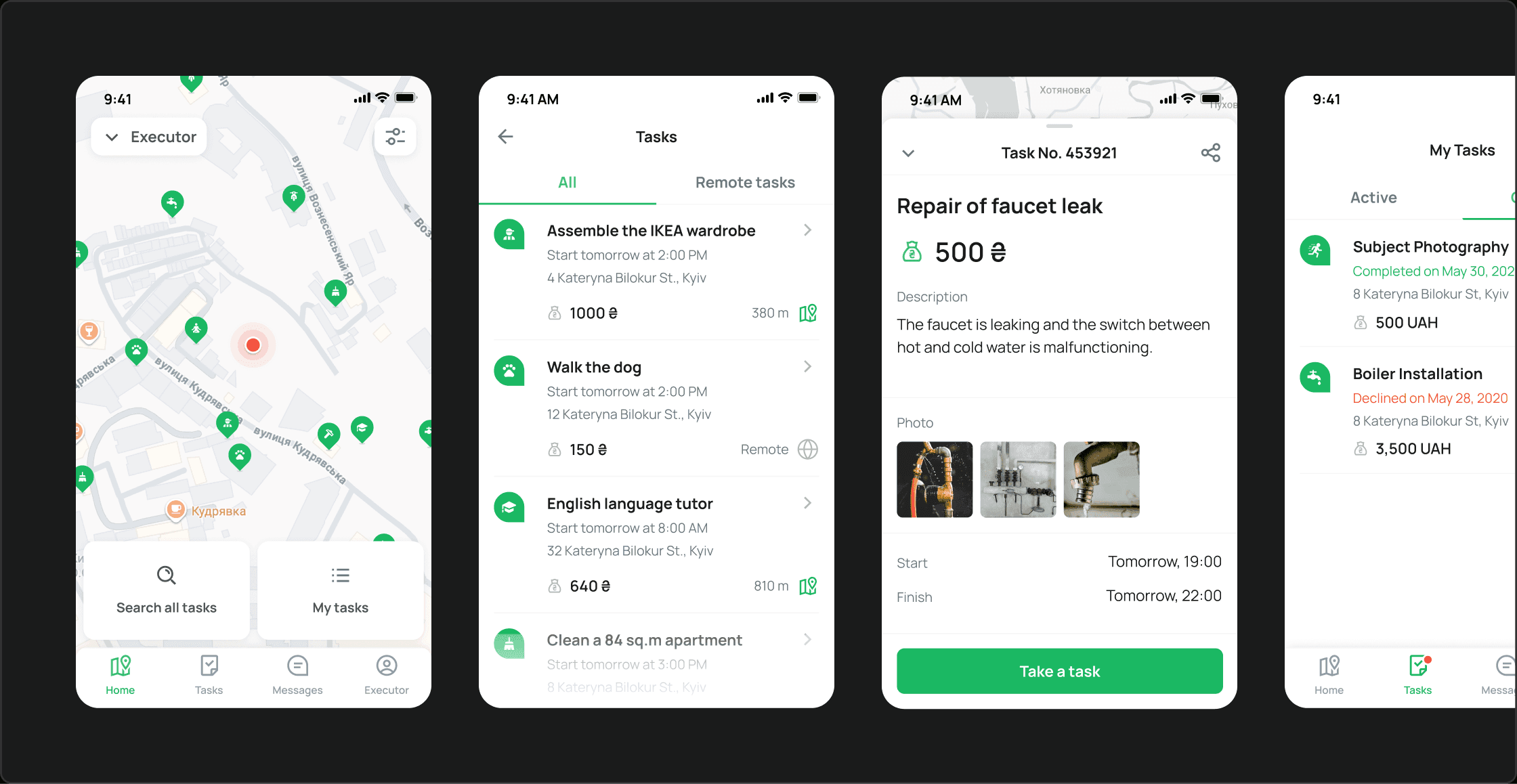
Instead of list‑first classifieds, Mapus opens on a map showing:
Client mode (I need help):
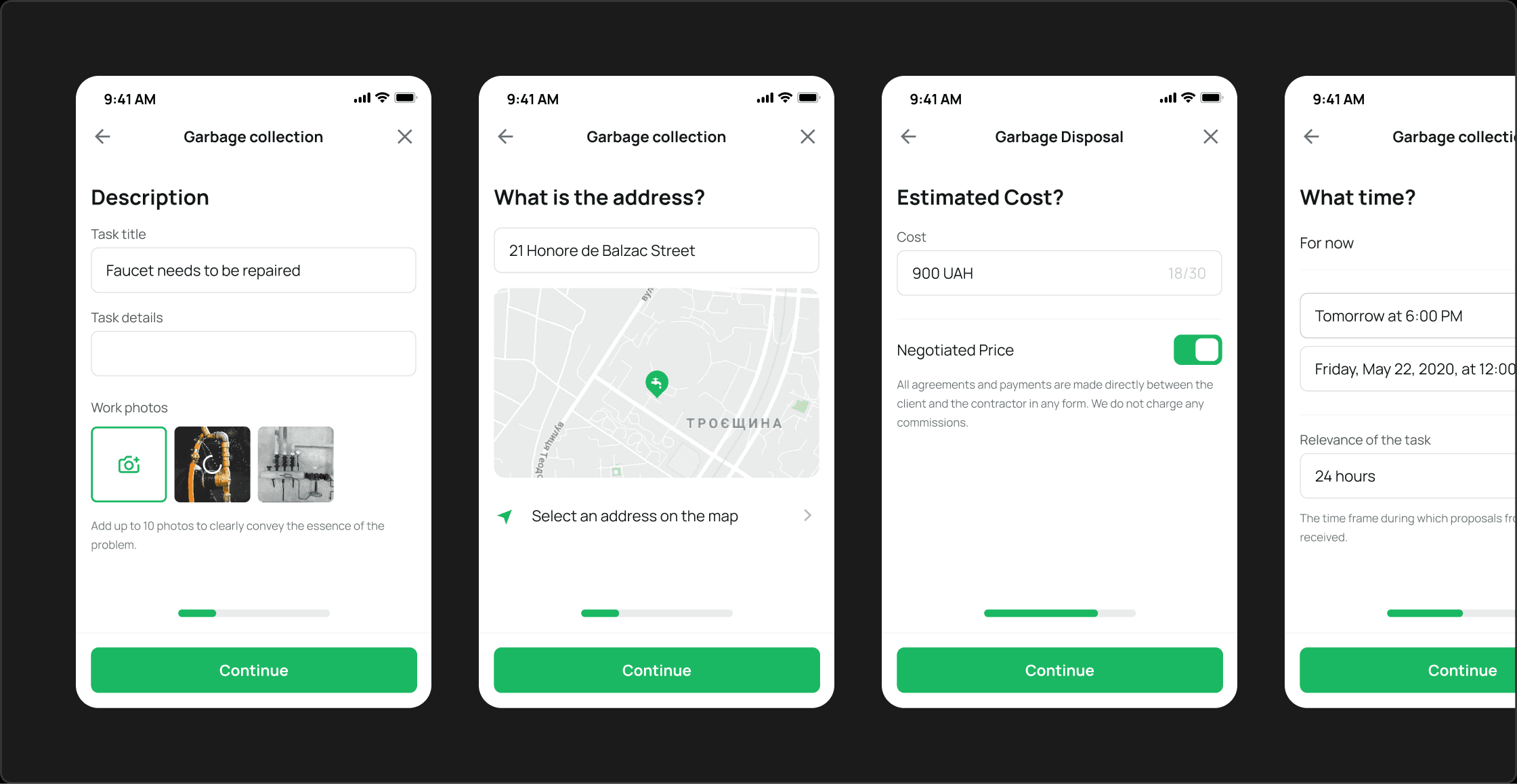
"Create task" → post and receive offers
"Find provider" → search verified executors nearby
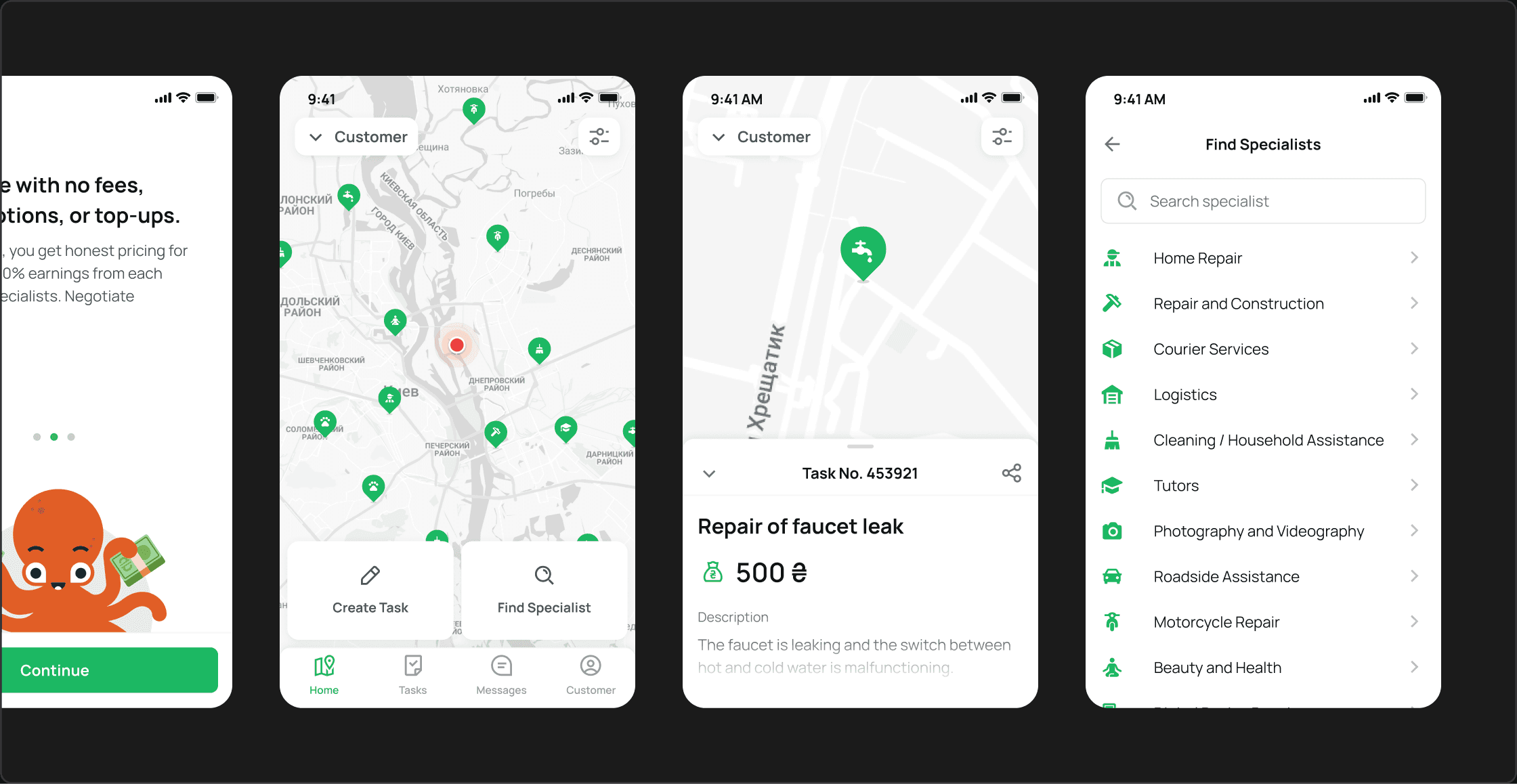
Executor mode (I can help):
"All tasks nearby"
"Tasks in my categories" → only relevant leads with push notifications
One‑tap toggle between modes — because people are often both client and executor.
Trust system
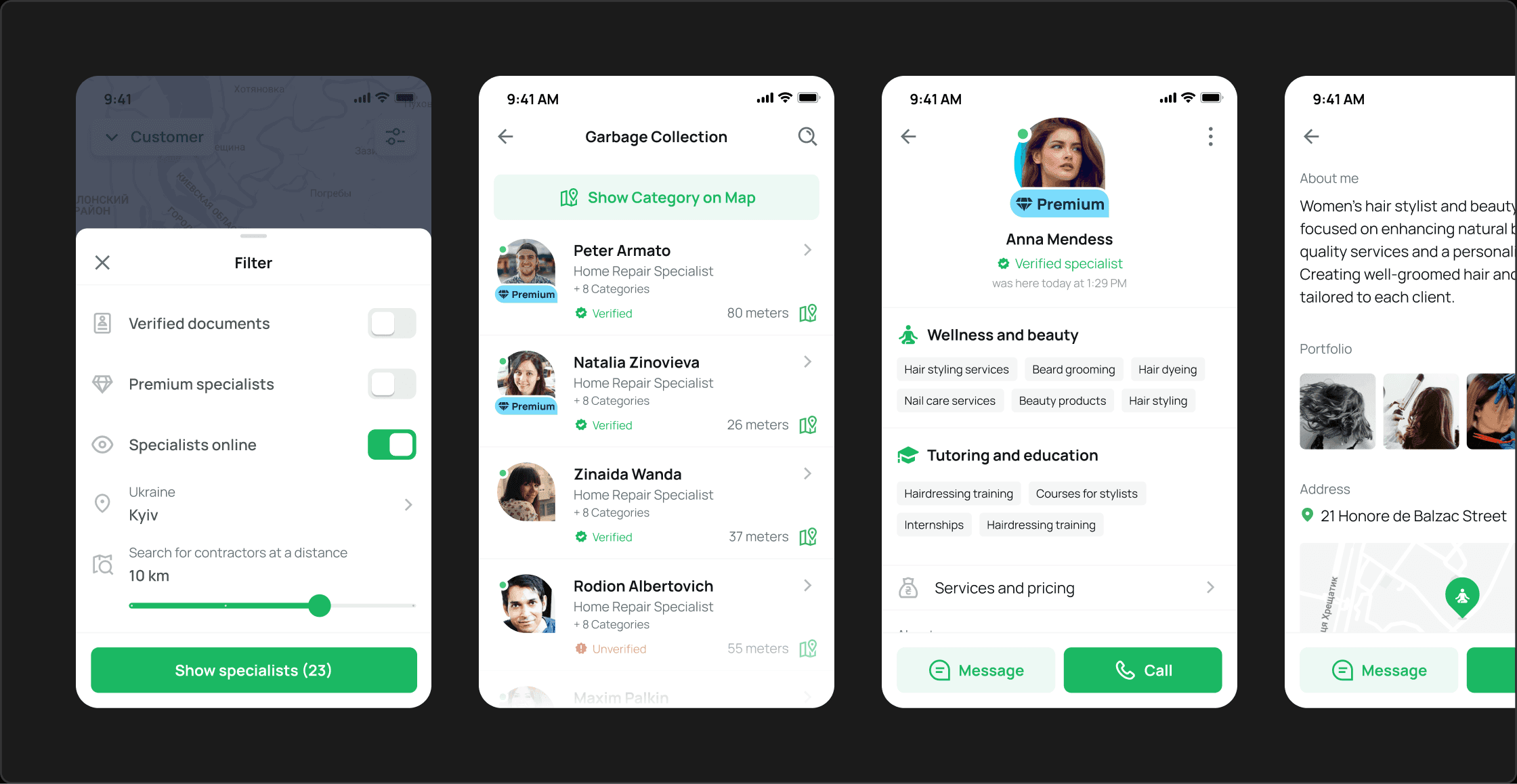
Verified vs unverified providers:
Verified badge: providers who uploaded passport/ID documents.
Unverified: anyone can join but less attractive to clients.
Clients see photos of work, ratings, categories, prices and exact location or district on each profile, building trust before messaging.
Smart filters & discovery
Executors set their categories once, then get:
Map filtered to "tasks in my categories only"
Push notifications for new relevant tasks nearby
Free: 2 categories | Premium: unlimited categories
Clients filter by urgency, budget, distance, verified status.
Key design decisions
1. Map as shared canvas
Both clients and executors see the same map surface, but with different overlays and actions.
Zoom/pan works like a "radar" for local opportunities — natural mental model from user interviews.
2. Dual‑path home screen
Early failure lesson: don't assume one primary use case.
Home screen now offers two clear paths immediately:
"Create task" (wait for offers) OR "Find provider" (message directly).
3. Frictionless role switching
One‑tap toggle between Client ↔ Executor modes.
Onboarding asks "current intent" but never locks users into one role.
Tech & MVP
Flutter cross‑platform (iOS + Android) with:
Map‑first architecture ready for nationwide scaling
Tested in Kyiv with real providers and clients
Simple monetisation: Free 2 categories | Premium unlimited
MVP validated clear product–market fit: users loved seeing real people nearby with verified profiles and relevant tasks.
The project is currently on hold due to a lack of funding.
Impact
Quantitative results under NDA, but key learnings:
Map‑first approach + dual paths resonated with real user needs: people want to see “who’s nearby” right away.
Verified badge system increased trust and boosted message conversion.
Category push notifications for service providers generated “hot leads.”
The architecture is ready to scale across Ukraine — it just lacked funding.
My role
Co‑founder & Product Designer:
Defined product vision based on human‑centered research
Conducted live interviews with handymen, cleaners, tutors, repair shops
Designed end‑to‑end experience: map‑first home, dual modes, onboarding, profiles, filters
Iterated home screen from single "create task" to dual paths after user feedback
Led Flutter implementation with engineering, designed interactions and empty states
Built MVP monetisation model balancing free access with premium expansion